Here is the next Schütze of the 1st Gruppe (Squad):


I just saw that I didn’t paint the aquila on the weapon 😦
Here is the next Schütze of the 1st Gruppe (Squad):
I just saw that I didn’t paint the aquila on the weapon 😦
Here is the first soldier ( Schütze) of the 1st Gruppe, 1st Zug , 1st Kompanie of the 1st Germania imperial Guard Regiment. The Germania System, home of the Galactic Knights space marine Chapter, consists of three habitable planets and one Death world. The planets are called Ruhr, Germania Prima, Germania Secunda and New Berlin. Ruhr is a forge world, Germania Prima is a death world, Germania Secunda is a agri world and New Berlin is a hive world. The 1st Germania Inf. Rgt. was raised on Germania secunda. The dialect spoken in the system is German. Of course High Gothic is the language of the Administratum of the System according to Imperial law.
The 1st Germania belongs to the so called “Landwehr” of the Germania System and is part of the Imperial Guard. There is a System defense force also wich is stationary in system in contrast to the Landwehr Rgt.s wich will be used anywhere in the Imperium of man. Most of the time the Landwehr operates in the same campaigns as the Galactic knights .
Here is the first Schütze:
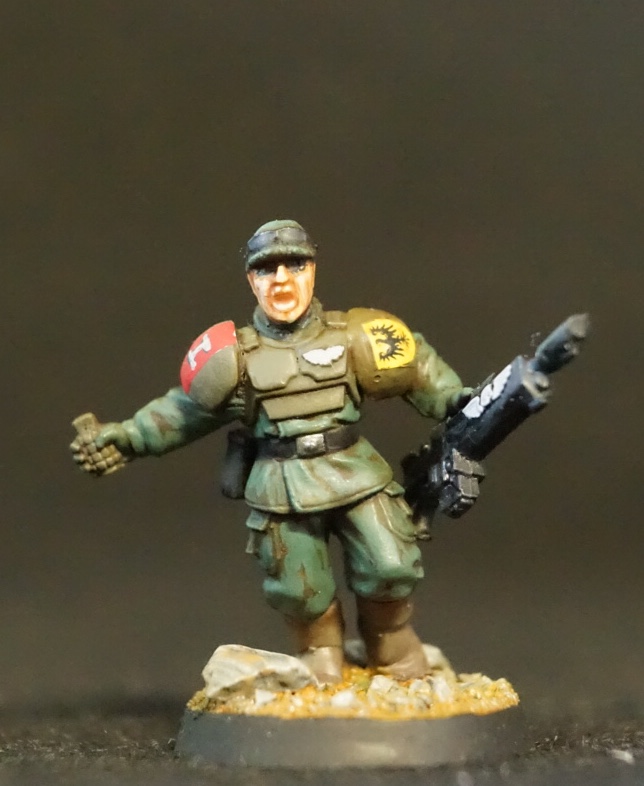


The 1st Germania is designated by the systems heraldic shield ( a black eagle on yellow). As used by the Galactic Knights, too. on the right shoulder pad there is a colors field ( in this case red for the first Zug [Platoon]), showing a white I as designation of the first Gruppe ( squad) of the platoon.
The figure is a Games Workshop Cadian trooper with a Anvil Industry head and a Eisenkern troopers helmet. The heraldic device is a selfmade decal the rest is freehand.
Here is the “Untaoffzier” ( sergeant) of the Killaboyz, lovingly called “Dat Boss” by the boyz:


There will be another 5 Orks in the unit including a weirdboy and Capitan Wughaz himself.
Here is the next Space Marine of the 2nd Gefechtskompanie 3rd Gruppe, Bruder Johann. This is the first beaky marine i did for the Galactic Knights. I will do a few more in older armor as it is the habit of the ordo teutonicus ,aka the Galactic Knights, to pass on old armor to new marines . So there will be ,eventually, all kinds of tactical and terminator armor in the chapter.

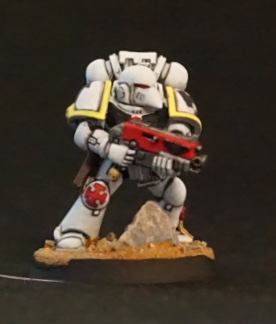
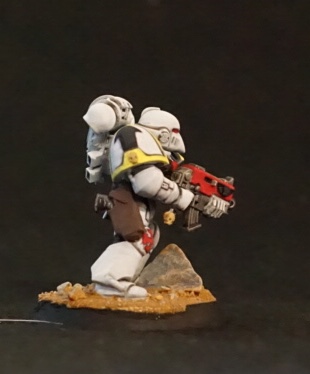


Here is the complete first half of the 3rd Gruppe 2nd Gefechtskompanie:

More to come!
Here is Bruder Titus a Melta gun armed Space Marine of the Galactic Knights of the Ordo Teutonicus Space Marine Chapter.

Some more pictures:


More to come!
Here is the next Gretchin for my Ork Waagh:
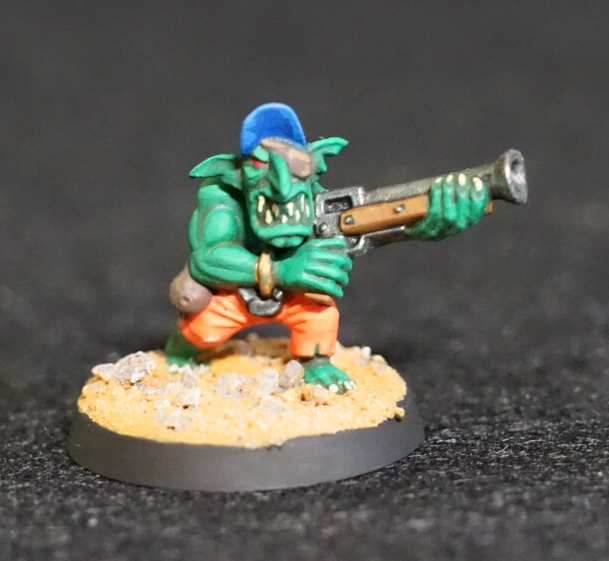


Hope you like what you see.
The build is finished and the basecoat is on:


As you can see, after base coating the contraption , you can’t tell that it is made from polystyrene. The only telltale is the wight when you lift it. So from now on no more pictures as long as I am not dropped out of the build something contest. I will take pictures of the painting process but will post them after the contest ended.
The Zulu are a Bantu ethnic group of Southern Africa and the largest ethnic group in South Africa, with an estimated 10–12 million people living mainly in the province of KwaZulu-Natal. Small numbers also live in Zimbabwe, Zambia, Tanzania and Mozambique. The Zulu were originally a major clan in what is today Northern KwaZulu-Natal, founded ca. 1709 by Zulu kaMalandela. In the Nguni languages, iZulu means heaven, or weather.. according to At that time, the area was occupied by many large Nguni communities and clans (also called isizwe=nation, people or isibongo=clan or family name). Nguni communities had migrated down Africa’s east coast over centuries, as part of the Bantu migrations probably arriving in what is now South Africa in about the 9th century. According to Wikipedia (read more here)

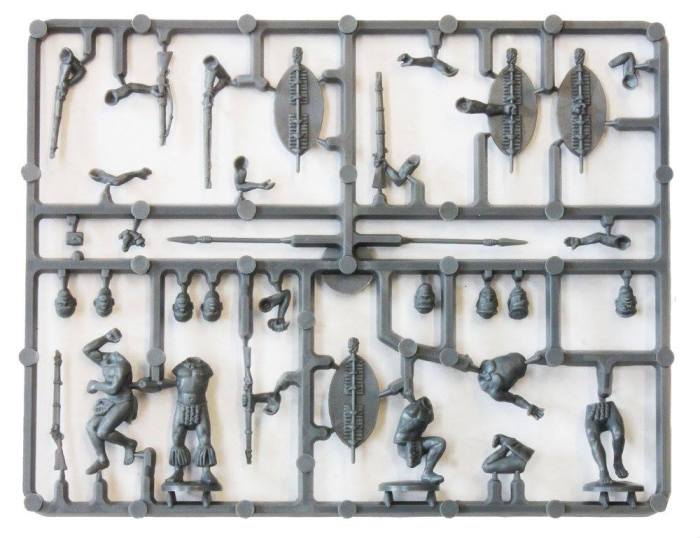
Now the Perrys are about to release these african warriors in 28mm and in plastic! They will be released on the 22nd/23rd of January to coincide with the 139th anniversary of the battles of Isandlwana and Rorke’s Drift.
Here are pictures of the sprues:

And some examples of finished figures:
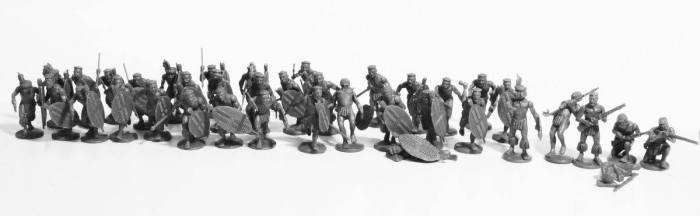
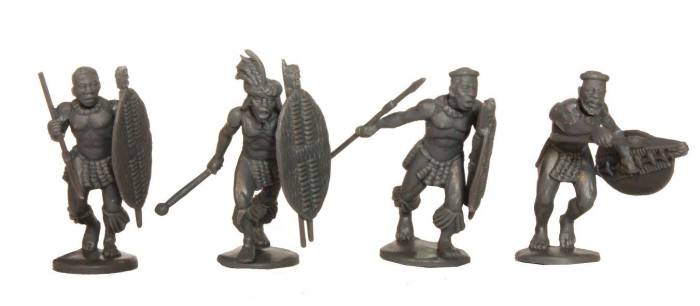
And the usual Perry discount during first release:
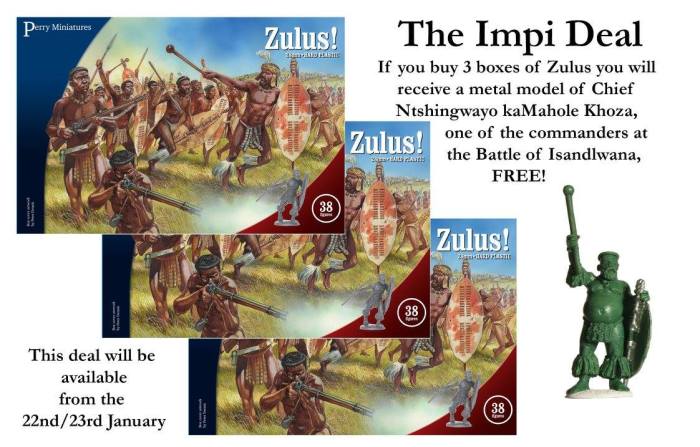
For more info visit the Perry page here
I found this tutorial on the unlucky General blog very interesting indeed!
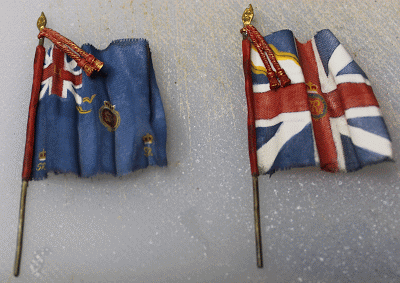
“I take a fair bit of effort to create my own flags. I see many people’s armies and units whose flags are an afterthought, an inconvenience or a nuisance step in the process to paint up a unit of toy soldiers and get them on that table. I get it completely. Many of us probably think it’s too fiddly or that we feel unable to compete with the level of detail commercially produced flags can achieve through the printing process. In many ways this is neither wrong nor unreasonable but I’d like to make the case for making your own flags and provide a crude how-to for what I am doing these days.” The Unlucky General.
To read the complete tutorial visit the Unlucky General

This is the latest member of the second Gefechtskompanie 5th Gruppe of the Galactic Knights. Bruder Gerald. This makes the 5 men Hellblaster squad complete.


Here is a picture of the completed Gruppe:

 wargamesgazette